Navigating Mine Hazards with Technology in 2026
The statistics are sobering: despite massive technological leaps, mining remains one of the world’s most high-stakes professions.
The latest MSHA mining safety data revealed that mining-related fatalities increased 27% in 2025, with 33 fatalities (compared to 26 in 2024).
Today, recognizing mine hazards isn’t just about looking for a loose rock or a flickering lamp. It’s about managing a high-tech ecosystem where the most dangerous threats are often the ones you can’t see, hear, or smell.
Whether you are a seasoned veteran or a new hire, the rules of the game have changed.
Let’s take a look at how technology can help you recognize and mitigate mine hazards in 2026.
Related: MSHA Silica Standard Receives 2024 Update.
Related: Stay Ahead of Silica Exposure: Updated OSHA Standards & Guidance
Recognizing Mine Hazards: New Standards for 2026
Historically, safety managers looked for “The Big Four”: Falls, equipment pinning, explosions, and cave-ins.
While these remain critical, the 2026 landscape is dominated by Respirable Crystalline Silica (RCS). Following the landmark MSHA rulings of 2024, the Permissible Exposure Limit (PEL) was slashed to a strict 50 µg/m³.
The hazard isn’t just “dust” anymore. It’s microscopic glass-like shards that cause irreversible lung damage. Recognizing this hazard now requires more than a squint of the eye.
Modern mines now utilize real-time aerosol monitors that provide instant feedback via alerts on wearable devices.
Typically, if you see visible dust clouds, you’re already too late. The goal in 2026 is to recognize the absence of adequate suppression before the first drill bit hits the ground.
And, of course, always maintain proper respiratory protection.
- See MSHA’s Guidelines on Lowering Miners’ Exposure to Respirable Crystalline Silica and Improving Respiratory Protection.
Common Mining Hazards And Their Prevention
The “Stop, Look, Analyze, Manage” (SLAM) technique has evolved to meet modern infrastructure. Today, an effective risk assessment must account for the “electrification gap”.
As mines transition to battery-powered electric vehicles, a new hazard has emerged: absolute silence.
Electric loaders don’t have the thunderous roar of a diesel engine. Recognizing the hazard of a moving vehicle now relies on Level 9 Collision Avoidance Systems, also known as CAS.
Your risk assessment should check that any proximity-detection wearables are properly synced with your site’s mesh network.
If your “smart PPE” isn’t pinging, the vehicle essentially doesn’t exist to you, and you don’t exist to it.
Additionally, always verify that automated “Slow-to-Stop” overrides are active before entering high-traffic zones.
MSHA: Safety Requirements for 2026
Today, mine safety compliance is data-driven.
MSHA now prioritizes the “Connected Miner” standard. This means recognizing hazards involves ensuring your digital lifelines (like your electronic tracking and communication devices) are functional.
Under current mandates, these systems must remain operational for 96 hours during a power failure or emergency.
Furthermore, teach your employees to recognize the hazard of “Compliance Fatigue.”
With maximum penalties for flagrant violations now exceeding $313,000, the stakes for your company are high. And yet, the stakes for the health of your team remain even higher.
MSHA’s current focus is on Thermal Runaway Prevention.
If you work near battery charging stations, recognizing the “sweet” chemical smell of a leaking lithium-ion battery is just as vital as recognizing the “rotten egg” smell of hydrogen sulfide.
- See MSHA Standard, 30 CFR Part 19 — Electric Cap Lamps.
Preventing Underground Mining Accidents
Ground control remains the backbone of underground safety.
While you still need to “scale” and check for “drifting,” today, technology provides an edge. Through the use of InSAR (Satellite Interferometry) and IoT sensors, you can detect millimeter-level shifts in a mine roof long before a human eye can see a crack.
To prevent accidents, you must recognize the hazard of inertia.
Don’t rely on the fact that a wall “looked fine yesterday.” Use thermal imaging cameras (now standard on many ruggedized tablets) to check for heat signatures in the rock mass, which can indicate structural stress or oxidation.
Also, pay attention to the “silent killers”: methane and carbon monoxide. While automated sensors can do the heavy lifting, your primary recognition tool is still your calibrated multi-gas detector.
Best Practices For Mine Safety Training in 2026
In 2026, the best training isn’t necessarily found in a classroom. It’s often found in virtual reality simulators. These tools allow your team to “experience” a high-pressure hazard (like a battery fire or a sudden inundation) without the physical risk.
The most important practice is Psychological Safety. Recognizing a hazard includes recognizing when a coworker is fatigued or distracted. With real-time health wearables now capable of tracking heart rate and core temperature, you can identify heat exhaustion before a worker collapses.
If your biometric monitor alerts you to a spike in core temperature, that’s a physical hazard that requires an immediate “Time Out.”
NIOSH’s EXAMiner Software
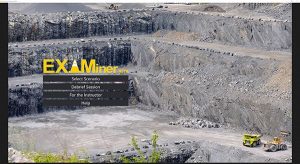
A cornerstone of modern training is NIOSH’s EXAMiner software. This PC-based tool allows miners to practice their workplace examinations in a safe, virtual environment using 360-degree panoramic photos of real mine sites.
EXAMiner has become a vital part of MSHA’s Part 46 annual refresher training, allowing trainers to upload site-specific photos so workers can hunt for hazards unique to their own plant or pit.
It bridges the gap between classroom theory and the split-second recognition skills needed on the ground, providing instant feedback on missed hazards before they become real-world accidents.
MSHA Medical Surveillance Requirements
Of course, in addition to the safety protocols above, OSHA & MSHA also maintain strict requirements when it comes to medical surveillance.
Though fatal accidents happen in the mining industry every year, inhalation of hazardous dusts contribute to significantly more life-altering diseases and deaths overall.
From silica physicals to respirator fit-testing and respirator medical clearances, chest x-rays, and more, regular medical surveillance for your team plays a pivotal role in keeping your team healthy and your company compliant.
Bringing It All Together
Recognizing mine hazards in 2026 is a blend of old-school intuition and high-tech vigilance. While the ground beneath us hasn’t changed, the tools we use to monitor it (and the machines we use to move it) have evolved into a digital frontier.
By staying updated on the latest MSHA silica standards, embracing the silence of electric fleets, and trusting your wearable data as much as your own eyes, you ensure that you don’t just finish the shift, but you do so with your health intact.
Safety is no longer just a hard hat and a pair of boots; it is a constant, connected state of awareness in an ever-shifting environment.
Medical Surveillance and Monitoring With Worksite Medical
In most cases, OSHA requires medical surveillance testing, and at no cost to employees.
Worksite Medical makes that program easier with mobile medical testing.
We travel right to your workplace to conduct on-site respirator fit tests (including N95 masks), silica exam physicals, audiometric exams, OSHA and HIPAA compliant online respirator medical clearances, pulmonary function tests, heavy metal lab work, and much more, right on your job site.
We also keep accurate, easy-to-access medical records for your convenience. You’ll keep your employees at work, and stay ahead of OSHA & MSHA inspections.
With Worksite Medical, a mobile medical testing unit — we can bring all the resources of a lab to you. Our certified lab technicians can perform both qualitative and quantitative respirator tests to ensure a perfect fit.
You’ll keep your employees at work, and stay ahead of OSHA and MSHA inspections.
Protect your team and your workplace now with Worksite Medical. Not sure what you need? Try our medical testing wizard here.
Give us a call at 1-844-622-8633, or complete the form below to schedule an on-site visit or to get your free quote.
Convenient, Compliant Occupational Medicine. Worksite Medical – Let Us Come to You!