Central Appalachian Miners Show Highest Percentage of Black Lung Disease in 25 Years
A recent NIOSH study found that 10 percent of coal miners, who have been on the job for 25-plus years, now suffer from coal worker’s pneumonicosis, or black lung disease.
However, in states such as Virginia, West Virginia, and Kentucky, that number doubled to 20 percent – the highest rate in 25 years.
“We haven’t seen this rate of black lung since before the early ’90s,” said NIOSH epidemiologist Cara Halladin, co-author of the study. “What you see now in active miners is what you’ll see later in former miners, and potentially greater disease and more progression…and so this is probably an underestimate of what we’ll see in the future.”
Black lung disease, a debilitating, and often fatal disorder, occurs as a result from inhalation of coal and silica dust.
These respirable toxic particles scar the lung tissue making it difficult to breathe. There are two types of black lung disease: simple and complicated – known as progressive massive fibrosis (PFM).
NIOSH confirmed that, in central Appalachia, 416 coal miners across three clinics had PFM, which is incurable.
What’s Causing the Gradual Increase?
The rise in black lung disease may be caused by the fact that working conditions and rules for miners have changed since many unions in the Appalachian region have been disbanded. Miners are now working longer hours with less time to rest in between shifts.
Changes in technology may also be leading to higher rates of this often fatal disease.
Mining technology has advanced with the use of powerful extraction machines, which are more time-efficient, yet throw more coal dust into the lungs of miners.
Recent incidents, such as the Upper Big Branch disaster in 2010, reveal that coal miners still face harrowing conditions.
When portions of the mine exploded, autopsies performed on the majority of those killed revealed that 71 percent of them had black lung disease.
Rules & Regulations for Coal Mining
It is tricky to measure the effect that regulations have on the occurrence of the disease, as it can take around 10 years for symptoms to arise.
In August 2014, the Mine Safety and Health Administration (MSHA) implemented a respirable dust rule which, according to MSHA, both increased protections for coal miners and closed several loopholes that masked their exposure to unhealthy coal mine dust.
Then, in August 2016, Phase III of the rule went into effect, which included a significant lowering coal mine dust concentration limits.
According to David Blackley, DrPH, epidemiologist and co-author of the previously mentioned NIOSH study, if employers properly monitor dust exposure and implement control methods, black lung disease is “entirely preventable.”
“Breathing coal mine dust is the sole cause of black lung,” Blackley said in recent NIOSH press release. “This study provides further evidence that effective dust control methods and protections to reduce coal mine dust exposure along with early detection of the disease are essential to protect miners’ health.”

The Worst of the Worst
Sure, there are costs associated with maintaining a healthy and safe workplace, but that’s something that should already be in the budget.
If it’s not, then you should make it a priority.
Unfortunately, for employees of a now-bankrupt Kentucky coal company, supervisors and officials decided to falsify air quality results in lieu of taking the proper safety precautions, which led to a grand jury indictment.
According to the Lexington Herald, the indictment states that supervisors and foremen instructed “miners to leave dust monitors in areas with cleaner air at times; have miners who were supposed to wear monitors work away from the mine face, where there is more dust; and have miners not wear monitors for their entire shifts.”
The company then allegedly submitted those falsified results to the MSHA. The indictment goes on to say that when an employee reported the alleged cheating, there was a surprise MSHA inspection that confirmed it. The employee eventually lost his job.
Another employee explained that “cheating on dust monitoring was common” in various mines, and that miners go along with it for fear of getting fired.
Putting your workers’ lives in more danger for the sake of avoiding fines should never be an option. And, in this case, it led to a series of events that may play out for decades to come if/when the workers contract black lung disease.
Getting the right support
Mining is difficult, but creating a health and safety program should be easy.
In fact, for any employer in any industry dealing with toxic dust exposure, working with a knowledgeable, experienced team of medical surveillance professionals is the best preventative action you can take.
You want to keep your workers safe and healthy, and keep your workplace compliant.
A good team will guide you through testing standards, alert of you any health concerns, and keep accurate medical surveillance records… all with little to no workplace disruption.
At Worksite Medical, we are proud to be one of the select NIOSH-approved X-ray facilities in the United States. Not only can you send your team to one of our standalone clinics in Pennsylvania or Maryland, you can also request medical units from our mobile fleet to come right to your job site.
As per NIOSH, “coal miners can receive a free chest x-ray when participating in a NIOSH program. The first program is for new coal miners and requires that when you begin working in underground coal mining, you must be offered a chest X-ray, either as part of a pre-placement physical examination or within six months after being hired.
Three years later you must be offered a second chest X-ray. If this second examination reveals evidence of pneumoconiosis, you must be offered a third chest X-ray two years after the second.
The second program is for all miners working in an underground coal mine.
You must be offered a chest X-ray approximately every five years during a six-month time period arranged by the coal mine and approved by NIOSH.”
Bringing It All Together
David Blackley said that early detection of black lung, or any other work-related disease for that matter, is essential to protecting workers’ health. It’s also of utmost importance to you as a leader, and to your organization.
The best way to bring the number of cases back down is with early detection and prevention, not avoidance and deception.
Once your health and safety plan is in place, you and your team will be in a position to thrive.
People get hurt and sick, but if you’re doing what to can to prevent that, then you’re giving them the best chance to overcome those obstacles while also protecting your company.
Contact us today. We’d love to help you get started on, or improve upon, your health and safety program.
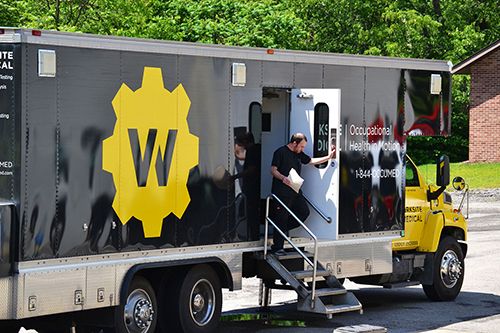
Create a Less Disruptive, More Productive Occupational Health Plan with Worksite Medical!
Are you looking for a way to keep your team safe, while also limiting risk and increasing production? Simplify your medical plan today. We help team leaders like you develop less disruptive, more convenient occupational health plans that comply with complex industry standards, thus creating a healthier, more productive workforce. Take control of your medical testing program, and make sure your team is within OSHA requirements.