Every day, thousands of young workers in the U.S. arrive on the job thinking “cancer” is something that happens only later in life – if it happens at all.
However, mounting evidence shows that early‑career exposures in construction, farming, and outdoor work can quietly shape a lifetime of cancer risk. For U.S. employers, this isn’t just a future healthcare cost. It’s a present‑day safety and compliance challenge that OSHA and NIOSH are now pushing to the front of the conversation.
Sectors like construction, agriculture, and outdoor work remain hotspots for hazardous agents such as silica, asbestos, chemicals, and solar radiation.
Although OSHA does not single out age as a formal cancer‑risk category, NIOSH and industry research consistently show that early‑career workers often face higher exposure burdens and less familiarity with controls, amplifying long‑term risks.
Here, we’ll show you how to protect younger workers in construction, agriculture, and outdoor roles, by aligning training, hazard controls, and medical surveillance with current OSHA and NIOSH guidelines.
Let’s break it down.
Related: Don’t Overlook These Occupational Respiratory Illnesses
Related: Is Your Workplace Literally Making You Sick?
What Is Occupational Cancer?
In the simplest terms, occupational cancer is any cancer caused (either entirely or in part) by exposure to carcinogens or hazardous conditions at work. Unlike a workplace injury that happens in an instant, cancer is a “slow-motion” hazard.
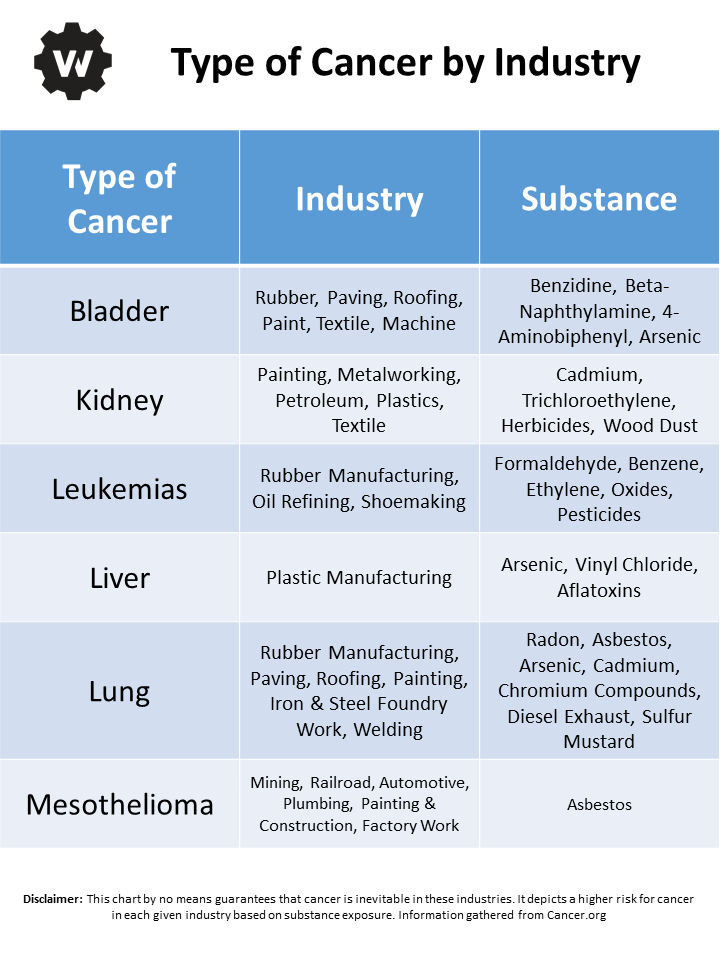
The National Institute for Occupational Safety and Health (NIOSH) and OSHA identify hundreds of potential carcinogens, from well-known culprits like asbestos and silica to emerging threats like wildland fire smoke and certain hazardous drugs in healthcare settings.
For a younger worker, the danger isn’t just the intensity of the exposure. It’s the cumulative effect over a 40-year career.
Younger Workers At Higher Risk for Workplace Cancer
Recent studies have highlighted a concerning trend: while overall cancer deaths in the U.S. have declined, the burden on the workforce remains significant.
According to data published in The Lancet Oncology in 2026, researchers analyzed nearly 500,000 cancer deaths among working-age adults in the U.S. and found that specific occupations (ranging from construction and extraction to landscaping and even healthcare) carry disproportionately high mortality rates.
For younger workers, the risk is unique. Because many occupational cancers have latency periods of 10 to 40 years, exposures occurring in your 20’s and 30’s often set the stage for a diagnosis later in life.
NIOSH emphasizes that the earlier and longer a worker is exposed, the greater the cumulative effect, which is why many prevention programs now target younger workers through better hazard education and exposure‑reduction strategies.
Construction Workers and Occupational Cancer Risk
Construction remains one of the highest‑risk sectors for occupational cancer. Workers can be exposed to silica dust, asbestos, diesel engine exhaust, wood dust, and solar UV radiation, all of which are associated with increased cancer risk.
OSHA’s respirable crystalline silica standard (29 CFR 1926.1153 / 1910.1053) and asbestos regulations (29 CFR 1926.1101) require engineering controls, respiratory protection, and exposure monitoring, yet many younger workers either lack training or are assigned to high‑exposure tasks without adequate supervision.
This highlights the need for integrating site‑specific hazard assessments, mandatory silica/asbestos training, and PPE enforcement into orientation for new hires.
Outdoor Workers and Exposure To Carcinogens
Outdoor workers (including farmers, landscapers, painters, tree planters, and groundskeepers) are regularly exposed to the sun, pesticides, wood dust, and diesel exhaust, all of which are recognized or suspected carcinogens.
NIOSH and OSHA recommend sun‑safety programs, shade structures, protective clothing, and proper PPE for chemical handling to cut these risks.
Given that many of these roles are filled by younger workers or seasonal labor, employers should standardize pre‑season training, hazard signage, and regular equipment checks instead of ad‑hoc “on‑the‑job” learning.
Medical Surveillance and OSHA Compliance
OSHA requires medical surveillance for certain high‑risk exposures, such as asbestos and respirable crystalline silica, and mandates that these exams be provided at no cost to employees.
Medical surveillance is not required for every carcinogen, but when it is, it helps detect early health effects and supports OSHA compliance. This means:
– Matching surveillance programs to the specific OSHA standards that apply (e.g., silica, asbestos, lead, beryllium).
– Ensuring qualified healthcare providers follow the exam requirements and keep records correctly.
When done right, surveillance can help you “stay ahead” of OSHA inspections by demonstrating that you’re proactively managing health risks, not just reacting to violations.
– See OSHA’s Guidelines on Medical Screening and Surveillance
Proper Training And Hazard Communication For Young Workers
One of the most consistent risk factors for young workers is poor hazard recognition and limited familiarity with PPE standards.
OSHA’s Hazard Communication Standard (29 CFR 1910.1200) requires employers to provide written programs, safety data sheets (SDS), labeling, and training so workers understand chemical hazards and how to protect themselves. For younger employees, this means:
– Delivering job‑specific, language‑appropriate training during orientation.
– Posting clear, visible hazard reminders at high‑risk locations.
– Encouraging questions rather than assuming workers will “figure it out.”
These steps align with current OSHA and NIOSH guidance and help reduce both injury and long‑term cancer‑related risk.
How to Limit Occupational Cancer Risk for Younger Employees
Limiting cancer risk for younger workers is less about one‑off fixes and more about building a culture of prevention. Practical steps you can take include:
– Prioritizing engineering controls (ventilation, dust suppression, exhaust capture) before relying on PPE.
– Using NIOSH‑recommended exposure limits (RELs) and OSHA PELs as benchmarks and going below them where feasible.
– Including occupational cancer topics in safety meetings, toolbox talks, and annual training refreshers.
NIOSH and OSHA both stress that early intervention and consistent precautions are far more cost‑effective than waiting for health problems to appear.
Key Takeaways
Younger U.S. workers in construction, agriculture, and outdoor roles face higher long‑term cancer risk from early carcinogen exposures. As a result, employers must align training, hazard controls, and medical surveillance with current OSHA and NIOSH guidelines.
By investing in early‑career safety education and continuous exposure monitoring, you can protect your workforce and reduce long‑term liability and healthcare costs.
Ultimately, treating young workers as a priority group for cancer‑risk reduction is not just good for health outcomes – it’s good business, too.
Don’t wait – get your OSHA-compliant respirator medical clearance today!
Medical Surveillance and Monitoring With Worksite Medical
In most cases, OSHA requires medical surveillance testing, and at no cost to employees.
Worksite Medical makes that program easier with mobile medical testing.
We travel right to your workplace to conduct vision testing, on-site respirator fit tests (including N95 masks), silica exam physicals, audiometric exams, OSHA and HIPAA compliant online respirator medical clearances, pulmonary function tests, heavy metal lab work, and much more, right on your job site.
We also keep accurate, easy-to-access medical records for your convenience. You’ll keep your employees at work, and stay ahead of OSHA & MSHA inspections.
With Worksite Medical, a mobile medical testing unit — we can bring all the resources of a lab to you. Our certified lab technicians can perform both qualitative and quantitative respirator tests to ensure a perfect fit.
You’ll keep your employees at work, and stay ahead of OSHA and MSHA inspections.
Protect your team and your workplace now with Worksite Medical. Not sure what you need? Try our medical testing wizard here, or reach out to us with questions.
Give us a call at 1-844-622-8633, or complete the form below to schedule an on-site visit or to get your free quote.