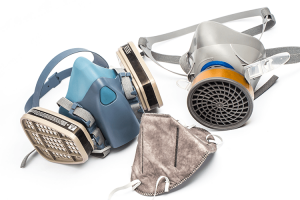
NIOSH Explains Respirator Seal Checks
When it comes to protecting yourself on the job with respirators, knowing how to perform a proper seal check is critical.
NIOSH has published a list of frequently asked questions about how to perform a respirator seal check. While OSHA requires an annual fit test to ensure that workers are properly protected, workers should perform their own seal check every time they wear a respirator.
Approximately 3 million workers across the United States are required to wear respirators to protect from harmful dust, chemicals, and particles that can become airborne. But how do you know you’re truly protected?
These respirators are only effective if there is a tight seal on the wearer’s face.
Any gaps can expose workers to harmful substances and lead to respiratory issues and illnesses. The answer lies in understanding what a respirator seal check is, why it’s essential, and how current standards from OSHA and NIOSH guide this practice, including some important updates in 2025 involving chemical, biological, radiological, and nuclear (CBRN) respirator protections.
Let’s break it down…
Related: Are Rule Changes Coming for Respirator Medical Clearance Requirements?
How to Perform a Seal Check
A respirator seal check (also known as a user seal check) is a quick test you perform each time you put on your respirator to ensure a tight seal against your face.
This is different from the formal fit test, which happens annually under OSHA regulations.
There are two main types of seal checks:
1. Positive pressure seal check:
With the respirator on, you gently exhale while blocking the exhalation valve or sealing points. If the mask pressurizes slightly without any air leaking, you’ve got a good seal.
2. Negative pressure seal check:
Here, you inhale sharply while covering the inhalation paths. The mask should collapse inward slightly and stay that way briefly. If air leaks in, the seal isn’t tight.
Both methods only take about a minute but are important steps to protect yourself from exposure.
While this may seem simple, it helps catch leaks caused by strap slippage or poor mask positioning before you enter a hazardous environment.
See OSHA’s Standard for User Seal Check Procedures- Mandatory (1910.134 App B-1).
What Is a User Seal Check?
A user seal check is a procedure you conduct yourself, but not a replacement for the formal fit test. Think of it as a quick safety check to confirm your respirator fits well at that moment.
According to NIOSH, once a respirator model and size have been successfully selected through an annual OSHA fit test, you should perform a user seal check every time you wear that respirator. This habit ensures the seal remains intact despite moving around or repositioning the mask.
Not all respirators support both positive and negative pressure checks. Always check the manufacturer’s instructions for how to perform the seal check correctly for your specific respirator.
See NIOSH’s Publication on User Seal Check.
What Is the Difference Between a Fit Test and a Seal Check?
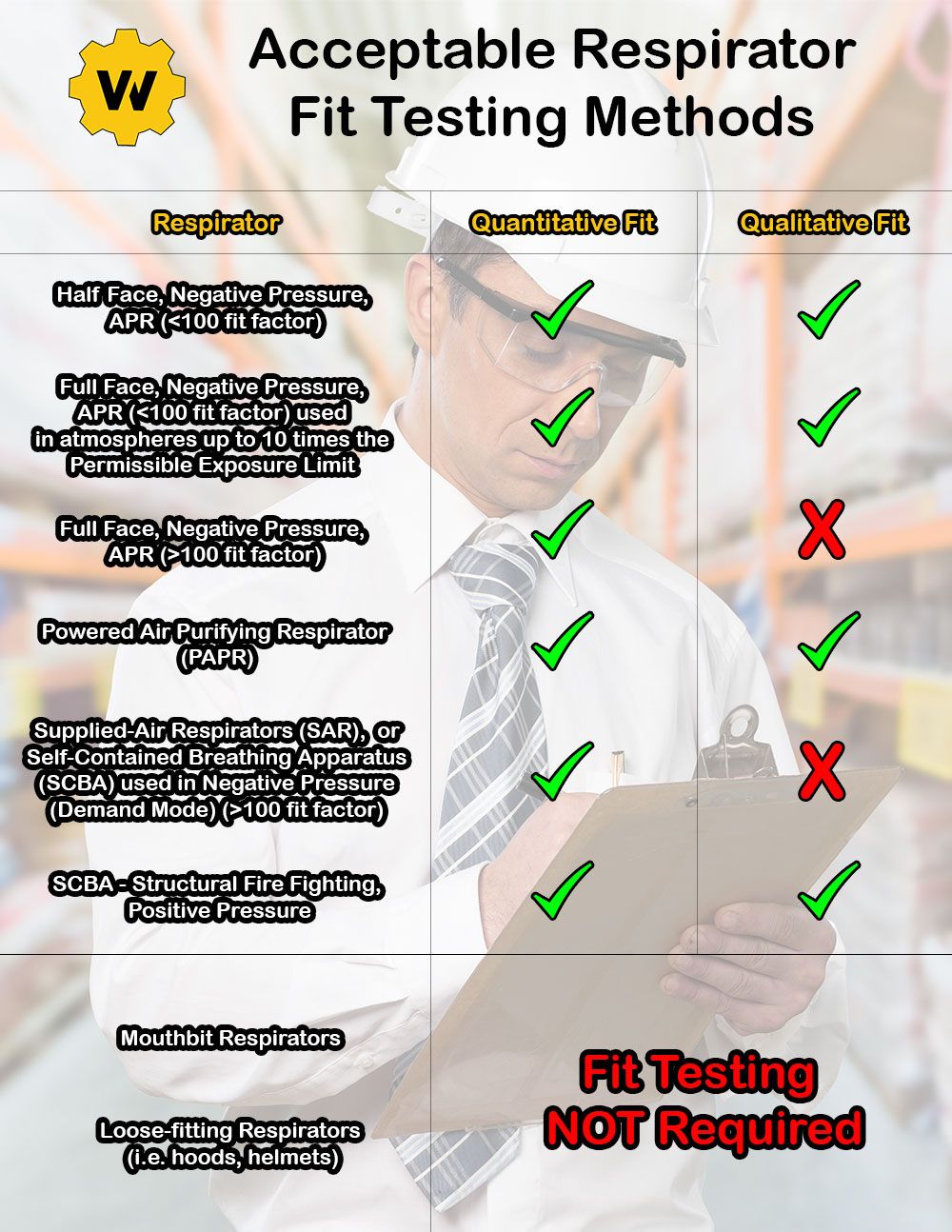
This is one of the most common questions. The short answer: The fit test is a formal, annual evaluation required by OSHA to determine which respirator model and size fits your face properly and provides protection. It uses qualitative or quantitative methods and is conducted by a trained professional.
The seal check, on the other hand, is a quick user-performed test done every time you put on your respirator to confirm the seal is intact at that moment.
It’s important to know that research (like studies reviewed by NIOSH and OSHA) shows that while seal checks are helpful, they are not sensitive or specific enough to replace formal fit tests. Seal checks can sometimes give false reassurance or false alarms.
Therefore, OSHA still mandates that employers provide fit testing annually, but combining fit tests with regular user seal checks leads to better overall respirator performance and worker safety.
See NIOSH’s Publication on Fit-Testing; Personal Protective Equipment.
Is a Seal Check Mandatory?
Yes, in a practical sense, user seal checks are recommended every time you don a respirator that requires a tight seal. OSHA does not replace fit testing with seal checks but expects workers to maintain seal integrity daily through these checks.
Employers are responsible for implementing a Respiratory Protection Program (RPP) that includes:
– Annual fit testing to select appropriate respirators
– Training workers on proper respirator use, including seal checks
– Medical clearance for employees to wear respirators
– Providing respirators that have been properly fit tested
– Ensuring user seal checks are performed correctly before workplace use
Seal checks often go overlooked or skipped, but they really should be a non-negotiable part of your safety routine.
Why Is the Seal Check Important?
The seal between your respirator and face is what stops dangerous particles from leaking in around the edges. No matter how good the filter material is, a poor seal means you’re breathing hazardous substances.
NIOSH estimates about 3 million U.S. workers must wear respirators on the job. A simple, frequent seal check can prevent costly exposures to dusts, chemicals, and airborne viruses, helping avoid respiratory illnesses.
Since the COVID-19 pandemic, attention on respirator effectiveness has increased tremendously in workplaces across industries. Proper seal checks contribute significantly to real-world protection.
See OSHA’s Publication on Seven Steps To Correctly Wear A Respirator At Work.
What’s New with CBRN Respirators in 2025?
In 2025, NIOSH updated its Chemical, Biological, Radiological, and Nuclear (CBRN) Respirator Protection List, doubling the number of approved hazard agents from 139 to 286. This update ensures that respirators certified for CBRN hazards are tested against emerging threats more comprehensively.
Despite the updated and expanded hazard list, NIOSH confirmed that the original 11 representative testing agents remain valid for evaluating CBRN respirator performance. There were no changes to how these respirators are tested or certified, but the scope and transparency of the testing have increased.
This ensures emergency responders and workers have access to rigorously evaluated respiratory protection for evolving chemical and biological threats.
If your workplace requires CBRN-rated APRs or disposable respirators for hazardous environments, ensure your equipment complies with these updated NIOSH standards.
See NIOSH’s Chemical, Biological, Radiological, and Nuclear (CBRN) Respiratory Protection Handbook, Revised September 2025.
Key Takeaways
Proper use and maintenance of your respirator is non-negotiable for health and safety in hazardous workplaces.
The user seal check is an essential daily step and should complement (not replace) the formal OSHA-required fit test performed yearly.
Following current OSHA respiratory protection standards, including annual fit testing, medical clearance, training, and good respirator hygiene, will keep you safer. And with NIOSH’s recent CBRN updates, you can be confident that tested respirators provide coverage against a broader range of hazards today.
If you haven’t had a fit test recently or need refresher training on seal checks and respirator care, make it a priority. Your safety depends on a well-fitting, properly worn respirator every time.
Stay In Compliance With Worksite Medical
In most cases, OSHA requires medical surveillance testing, and at no cost to employees.
Worksite Medical makes that program easier with mobile medical testing.
We conduct audiometric exams, OSHA and HIPAA compliant online respirator medical clearances, silica exam physicals, on-site respirator fit tests (including N95 masks), pulmonary function tests, heavy metal lab work, and much more, right on your job site.
We also keep accurate, easy-to-access medical records for your convenience. You’ll keep your employees at work, and stay ahead of OSHA inspections.
With Worksite Medical, a mobile medical testing unit — we can bring all the resources of a lab to you. Our certified lab technicians can perform both qualitative and quantitative respirator tests to ensure a perfect fit.
You’ll keep your employees at work, and stay ahead of OSHA and MSHA inspections.
Protect your team and your workplace now with Worksite Medical. Not sure what you need? Try our medical testing wizard here.
Give us a call at 1-844-622-8633, or complete the form below to schedule an on-site visit or to get your free quote.
Convenient, Compliant Occupational Medicine. Worksite Medical – Let Us Come to You!