You never know when OSHA might come calling, which is why it’s important to always be prepared.
Even if you think your worksite is completely compliant, these common OSHA health infractions have a way of appearing when you least expect.
After all, what you might think is a small detail could end up costing you thousands of dollars in fines.
Here are some common fines that you can prevent right now:
1. Failure to Provide Adequate Hazard Communication Training
In 2021, hazards communication failure was the 5th most commonly cited OSHA health fine, carrying a possible penalty of over $13,000 per violation.
And, they can pile up in a hurry too – with that much tacked on for every day the issue remains unfixed by OSHA’s deadline.
These health violations are considered especially serious if OSHA finds that death or serious physical harm could occur from employees being unaware of hazards.
Fortunately, these are among the easier OSHA health fines you can prevent. There’s no expensive equipment to buy, and no machinery to upgrade or maintain.
Make sure that all chemicals are properly labeled, and that you maintain a written plan to communicate the dangers to your workers.
New employees need to have proper training, while even veteran workers should have periodic safety refreshers.
With proper labeling and written plans, the majority of these OSHA health fines are easily avoided.
2. Failure to Provide Respiratory Protection
Nearly every year, respiratory protection violations are among the most common handed out by OSHA, under protection standard 1910.134.
In fact, for the last several years, only fall protection was more frequently cited.
The standards states, “A respirator shall be provided to each employee when such equipment is necessary to protect the health of such employee. The employer shall provide the respirators which are applicable and suitable for the purpose intended. The employer shall be responsible for the establishment and maintenance of a respiratory protection program.”
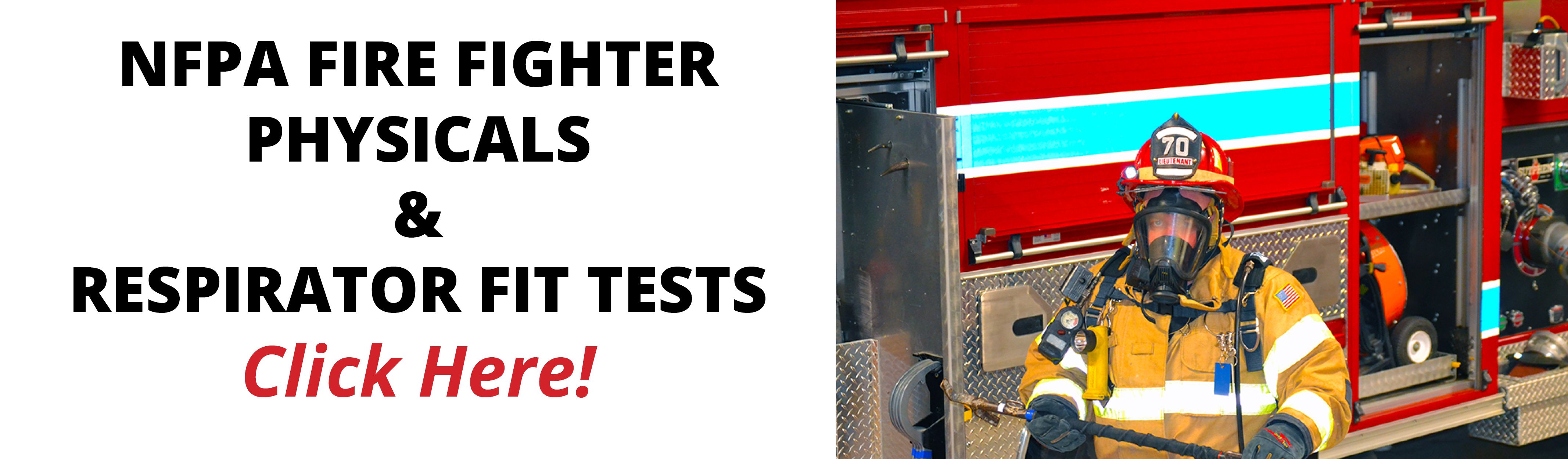
You can schedule respiratory fit tests to make sure that all of your personal protective equipment is up to code. It’s not only what’s best for your employees, it’s what’s best for your business.
3. Failure to Provide Personal Protection Equipment (PPE)
Respiratory protection isn’t the only PPE high up on the list of OSHA health fines.
Last summer, a Milwaukee, Wis. metal fabrication facility was fined for several issues – most notably, a lack of a hearing protection program, along with amputation hazards. In all, they received more than $216K in avoidable OSHA fines.
“Ignoring hazards identified in earlier OSHA inspections suggests that [the company] is not committed to protecting its workers’ safety and health,” said OSHA Area Director Chris Zortman in Milwaukee.
Amputation and hearing loss are irreversible, life-altering injuries. Companies must implement required safety and health measure to prevent employee exposure to these hazards.”
In many cases, exposure to noise is unavoidable. When it is, make sure your team has access to (and more importantly, uses) adequate hearing protection.
Schedule audiometric testing today to make sure your workers’ hearing is properly protected.
RELATED ARTICLE: Are Your Employees Using Proper Hearing Protection?
4. Failure to Provide Medical Evaluation
After a complaint of unsafe working conditions, a Texas company faced $218,839 in OSHA fines, including a serious violation for not conducting proper medical evaluations.
Medical testing is required for certain workers, and is generally a good practice for all employers to make sure that none of their employees have health issues.
When ignored, underlying health issues can lead to complications when wearing devices like respirators.
Make sure your staff has undergone the appropriate evaluations before they’re set to work in hazardous jobs.
Worksite Medical offers mobile medical testing that can come directly to your worksite. Click below learn more about our services, and how we can keep you compliant.
SERVICES: Medical Surveillance Testing Services
5. Fall Protection Failure: The Most Common OSHA Health Fine
Falls are the number one killer of construction workers. And, year after year, they’re the number one OSHA citation handed out to employers.
In 2019 (the most recent data given by OSHA as of the time of publishing) , 880 construction workers were killed from falls – a third of all deaths in the industry. Additionally, nearly a quarter million were injured enough to require time off work.
Though it’s not always easy, keeping your team safe from falls is crucial.
Of course, working from ground level is the best solution, but it’s not always possible.
When working at a height is required, make sure that the proper protections are in place. Guardrails, body harnesses, and solid tie-off points all need to work together to form a web of safety for your team.
Whatever it takes, make sure your staff stays protected. Your workers will thank you, and so will your bottom line.
Stay in Compliance with Worksite Medical
In most cases, OSHA requires medical surveillance testing, and at no cost to employees.
Worksite Medical makes that program easier with mobile medical testing.
We conduct on-site respirator fit tests, as well as audiometric exams, pulmonary function tests and heavy metal lab work, right on your job site. We also keep accurate, easy-to-access medical records for your convenience. You’ll keep your employees at work, and stay ahead of OSHA inspections.
With Worksite Medical, a mobile medical testing unit — we can bring all the resources of a lab to you. Our certified lab technicians can perform both qualitative and quantitative respirator tests to ensure a perfect fit.
Protect your team and your workplace now with Worksite Medical. Not sure what you need? Try our medical testing wizard here.
Give us a call at 1-844-622-8633, or complete the form below to schedule an on-site visit or to get your free quote.